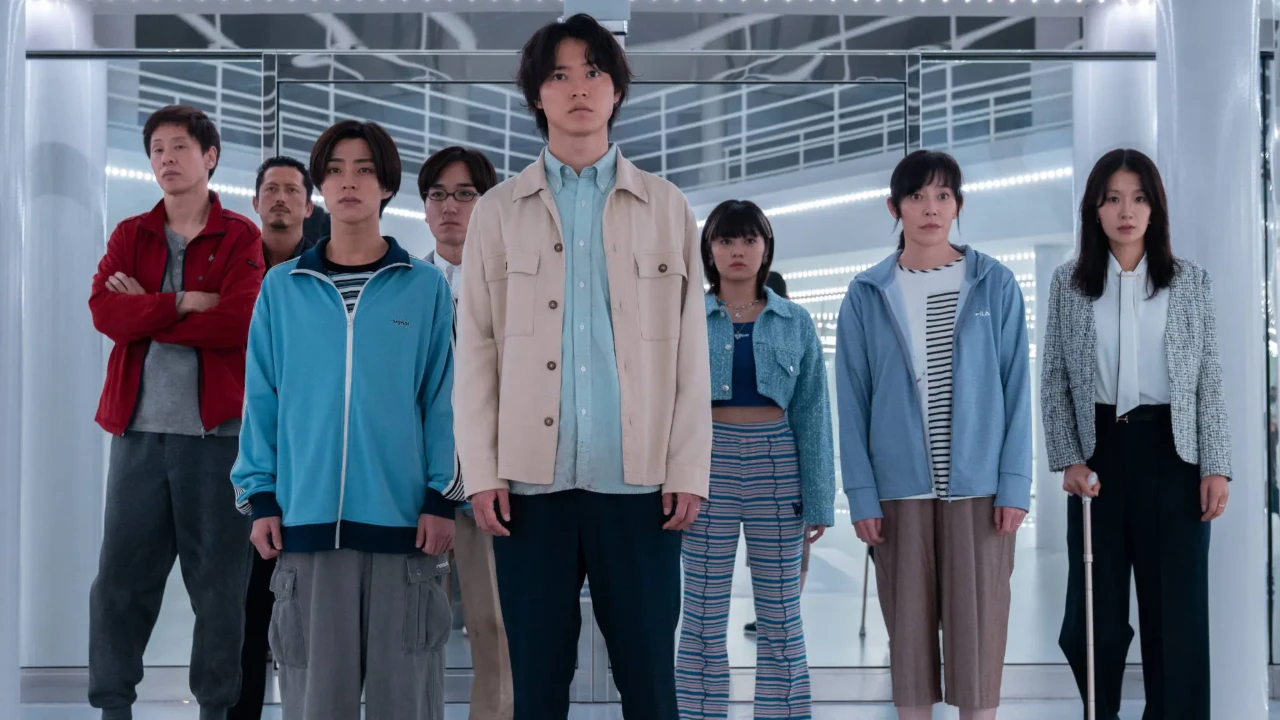
Queensland’s Alt.VFX takes centre stage in Alice in Borderland Season 3, delivering ambitious, large-scale visual effects that drive one of the series’ most explosive episodes. Supported by Screen Queensland’s Post, Digital and Visual Effects (PDV) Incentive, the Brisbane-based studio demonstrated its technical depth and creative leadership on the global Netflix phenomenon—pushing the limits of fire simulation, destruction and digital environment work while reinforcing the strength of Queensland’s post-production sector.


Led by Head of Production Flavia Riley and Head of 3D Jamie White, Alt.VFX was responsible for a pivotal sequence in which millions of flaming arrows rain down on a temple, triggering a relentless inferno that engulfs the unsuspecting players within. The work required extensive digital set extensions, complex environmental destruction and seamless integration between practical pyrotechnics and CG simulations. White spent much of the production building and refining layered effects in Houdini—“everything from small flickering flames to massive explosions that interact with practical elements”—carefully shaping each moment to match the creative vision while grounding it in physical reality.

“Alice in Borderland has such a specific aesthetic—that blend of hyperrealistic violence with surreal game-like elements,” White explained. Achieving that balance meant navigating the challenges of matching CG fire with real flames captured on set. “One of the largest challenges of this sequence was quite often CG fire would be sitting right next to something that was set on fire on location in the plate. Ask any CG artist; being placed right next to the real thing is very, very tricky.”

To meet the scale of the sequence, Alt.VFX developed new approaches to fire simulation capable of transitioning from realistic ignition points into stylised, story-driven infernos. Each shot required multiple fuel sources, dynamic wind conditions and complex interactions with debris and collapsing structures. White continued:
“We ran hundreds of simulations, each taking 8-12 hours to complete, and developed a sophisticated caching system to manage the enormous data requirements.”
Maintaining continuity across dozens of shots filmed over multiple days was also critical.
“We also can’t cut back and see the same fire. It needs to have gotten bigger, consumed more of the object that it’s burning and produce more smoke. That continuity was crucial to me in making the whole scene feel grounded. We had to maintain continuity across dozens of shots filmed over multiple days, and the flames needed to tell a story—guiding the audience’s eye and building tension throughout the sequence.”
Jamie White, Head of 3D at Alt.VFX
The scale of destruction pushed the studio into new creative territory. “We hadn’t tackled destruction and fire simulation at this kind of scale before,” Riley said. “So, it was a major technical and creative challenge for us. Thankfully, our brilliant team of artists and pipeline developers rose to the occasion. They created a suite of proprietary tools that streamlined the process and allowed us to push the quality even further. Those innovations are now a regular part of our toolkit—born from the challenges of this project.”

As Head of Production at Alt.VFX and Line Producer on Alice in Borderland, Riley coordinated workflows across departments, ensuring seamless collaboration between artists, supervisors and filmmakers. “Every department and every artist contributes to the final vision, and it’s my job to facilitate those connections and keep everything running smoothly,” she said, describing a typical day in post-production as “a bit like herding cats—but in the best possible way!” Both Riley and White began their days reviewing overnight renders and feedback—“that still excites me,” White added—highlighting the dynamic, ever-evolving nature of the craft.

Collaboration extended beyond the studio walls. White emphasised the importance of integrating practical and digital elements:
“Since fire effects rarely exist in isolation, I work closely with lighting artists, compositors, animators, modelling and rigging for seamless integration, and often looking through the treasure trove of practical effects that the on-set team put so much time into making, to match our digital elements to on-set pyrotechnics. Shout out to that team, I used your elements everywhere I could, and it was crucial work. Thank you!”
Riley echoed the collaborative spirit of the project: “No two days were ever the same. It was an incredibly dynamic and collaborative process. There’s something magical about seeing all those elements—compositing, animation, effects, colour—come together into a single, cohesive story.”
For Alt.VFX, storytelling remained the ultimate goal. “The technical challenges keep me engaged day-to-day, but it’s the creative satisfaction that makes this career fulfilling,” White said.
“My favourite aspect is the moment when all the technical work disappears and you’re left with pure storytelling. There’s nothing quite like seeing a shot that you’ve spent weeks perfecting integrated into the final edit, where the VFX serves the story so seamlessly that audiences don’t think about the technical achievement—they’re just completely absorbed in the narrative.”
Jamie White, Head of 3D at Alt.VFX
The studio’s involvement began well before final post, reinforcing its belief that VFX is most effective when integrated into storytelling from the earliest stages. “The most successful projects happen when everyone understands that VFX is part of the storytelling process, not just a technical add-on,” White said. Riley added:
“When we’re involved early, we can help determine what should be done practically on set versus what should be handled digitally, and plan accordingly. That early creative dialogue not only saves time and money but also ensures the final product looks seamless. Post-production isn’t just about solving problems—it’s about being part of the creative vision from day one.”
Flavia Riley, Head of Production at Alt.VFX
White also shared practical insights for filmmakers collaborating with VFX teams: “For DOPs: Lighting reference is absolutely crucial… providing clean plates and multiple exposure passes gives us so much more flexibility in compositing.” “For directors: Early involvement in pre-production makes a huge difference… realistic expectations about timing are crucial.” And for producers: “The biggest help is understanding that VFX isn’t just a post-production cost—it’s part of the creative process that benefits from proper planning and adequate time.”

For Alt.VFX, Alice in Borderland Season 3 stands as both a creative milestone and a showcase of Queensland’s world-class VFX capabilities. Through innovation, collaboration and a relentless focus on storytelling, the studio transformed complex technical challenges into cinematic spectacle—delivering an unforgettable sequence where technology disappears and the audience is left immersed in pure visual storytelling.
Watch the full VFX breakdown below: